
10HU-007
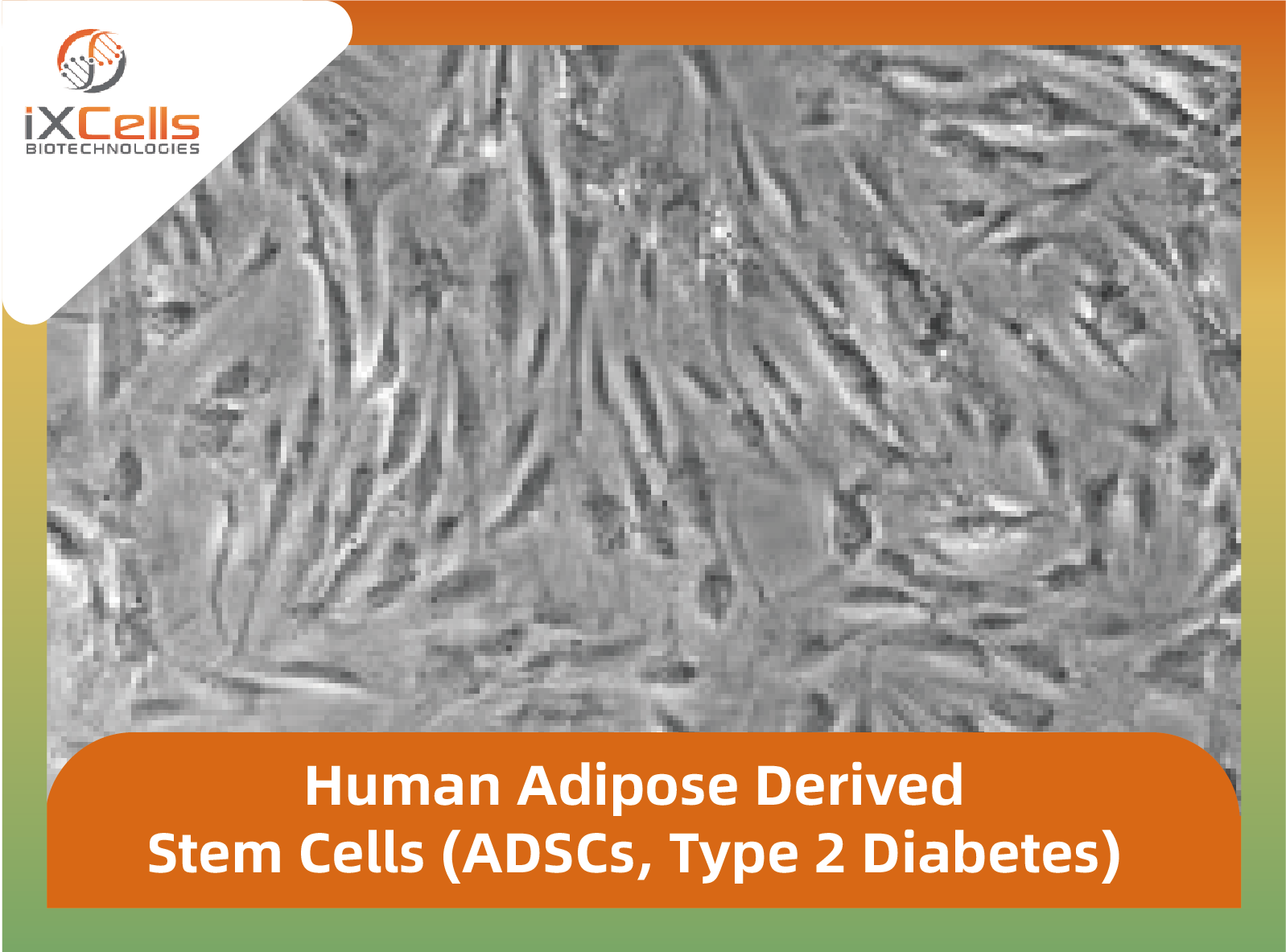
Human Adipose Derived Stem Cells (ADSCs, Type 2 Diabetes)
Cryopreserved, 0.5 million cells/vial
产品与技术资料CELL CULTURE / PRODUCT
01 / PRODUCT INFORMATION
| Protocols |
| Thawing of Frozen Cells 1. Upon receipt of the frozen cells, it is recommended to thaw the cells and initiate the culture immediately in order to retain the highest cell viability. 2. To thaw the cells, put the vial in 37°C water bath with gentle agitation for 1-2 minutes. Keep the cap out of water to minimize the risk of contamination. 3. Prepare complete medium. 4. Pipette the cells into a 15 mL conical tube with 5 mL fresh Endothelial Cell Growth Medium (Cat# MD-0010). 5. Centrifuge at 1,000 rpm (~220 g) for 5 minutes under room temperature. 6. Remove the supernatant and resuspend the cells in fresh Endothelial Cell Growth Medium. 7. Culture the cell in T75 flask. Change the medium every other day until cells reach 80-90% confluence. Safety Precaution: it is highly recommended that protective gloves and clothing should be used when handling frozen vials. Standard Culture Procedure 1. HHSECs can be cultured in Endothelial Cell Growth Medium (Cat# MD-0010). 2. When cells reach ~80-90% confluence, remove the medium, and wash once with sterile PBS (5 mL/T75 flask). 3. Add ~2.5 mL of 0.25% Trypsin-EDTA to the flask and incubate for ~3 minutes at 37°C. Neutralize the enzyme by adding 2-3 volumes of cell culture medium. 4. Centrifuge 1,000 rpm (~220 g) for 5min and resuspend the cells in desired volume of medium. 8. Seed the cells in the new culture vessels at 5 × 10³ cells/cm2. Change the medium every other day until cells reach 80-90% confluence. |
| Tissue | Normal adult human liver |
| Package Size | 0.5 million cells/vial |
| Passage Number | P2 |
| Shipped | Cryopreserved |
| Storage | Liquid nitrogen |
| Growth Properties | Adherent |
| Media | Endothelial Cell Growth Medium (Cat# MD-0010) |
02 / PRODUCT INFORMATION
Product Description
The human liver contains two distinct types of endothelial cells: vascular endothelial cells and sinusoidal endothelial cells. Human Hepatic Sinusoidal Endothelial Cells (HHSECs) are a specialized subset of microvascular endothelial cells that exhibit a distinct phenotype compared to other endothelial cell types. HHSECs function as antigen-presenting cells, facilitating antigen presentation to CD4+ T cells, and play a crucial role in regulating the immune response within the liver [1]. Additionally, HHSECs contribute actively to liver repair by serving as dynamic regulators that respond promptly and locally to zonal environmental stimuli [2].
iXCells Biotechnologies provides high quality HHSECs, which are isolated from human liver and cryopreserved at P2, with ≥ 0.5 million cells in each vial. These HHSECs express CD31/PECAM-1, VE-Cadherin and von Willebrand Factor (vWF). They are negative for HIV-1, HBV, HCV, mycoplasma, bacteria, yeast, and fungi, and can be further expanded for no more than 3 passages under the conditions suggested by iXCells Biotechnologies. Further expansion may decrease the purity.
Figure 1. Phase contrast images of Human Hepatic Sinusoidal Endothelial Cells (HHSEC, Adult). The cells were recovered and seeded at 10,000 cells/cm2 following iXCells’ protocol. The images were taken at the indicated time post-recovery.
Figure 2. Immunofluorescence staining of HHSECs using antibodies against CD31/PECAM-1 (green), VE-Cadherin (red), and vWF (green). The nuclei were counterstained by DAPI (blue).
Product Details
| Organism | Homo Sapiens, Human |
| Cell Type | Endothelial Cell |
| Tissue | Human Liver |
| Disease | Normal |
| Package Size | 0.5 x 10⁶ cells/vial |
| Passage Number | P2 |
| Growth Properties | Adherent |
| Product Format/Shipped | Cryopreserved |
| Storage | Liquid Nitrogen |
| Associated Media | Endothelial Cell Growth Media |
References
[1] Limmer A, and Knolle PA. Liver sinusoidal endothelial cells: a new type of organ-resident antigen-presenting cell. Arch Immunol Ther Exp (Warsz) 2001; 49 (1): S7-11.
[2] Wach KE etc. Sinusoidal ultrastructure evaluated during the revascularization of regenerating rat liver. Hepatoloty 2001; 33 (2): 363-378.
03 / PRODUCT INFORMATION
04 / PRODUCT INFORMATION
此 Bioz 组件为宽版,可左右滑动查看完整内容。
Bioz 实时文献组件 · 可在组件内筛选和滚动浏览;无法载入时可在 Bioz 打开。
05 / PRODUCT INFORMATION
SAME COLLECTION
10HU-007
Cryopreserved, 0.5 million cells/vial
产品与技术资料
10HU-001
Human Adipose Derived Stem Cells (hADSC, Normal)
Cryopreserved, 0.5 million cells/vial · 2 种现有规格
产品与技术资料
10HU-020
Human Aorta Endothelial Cells
Cryopreserved, 0.5 million cells/vial
产品与技术资料
10HU-190
Human Aortic Smooth Muscle Cells (HASMC)
Cryopreserved, 0.5 million cells/vial
产品与技术资料BIOMO / 实验需求


